
Beef Cuts Explained
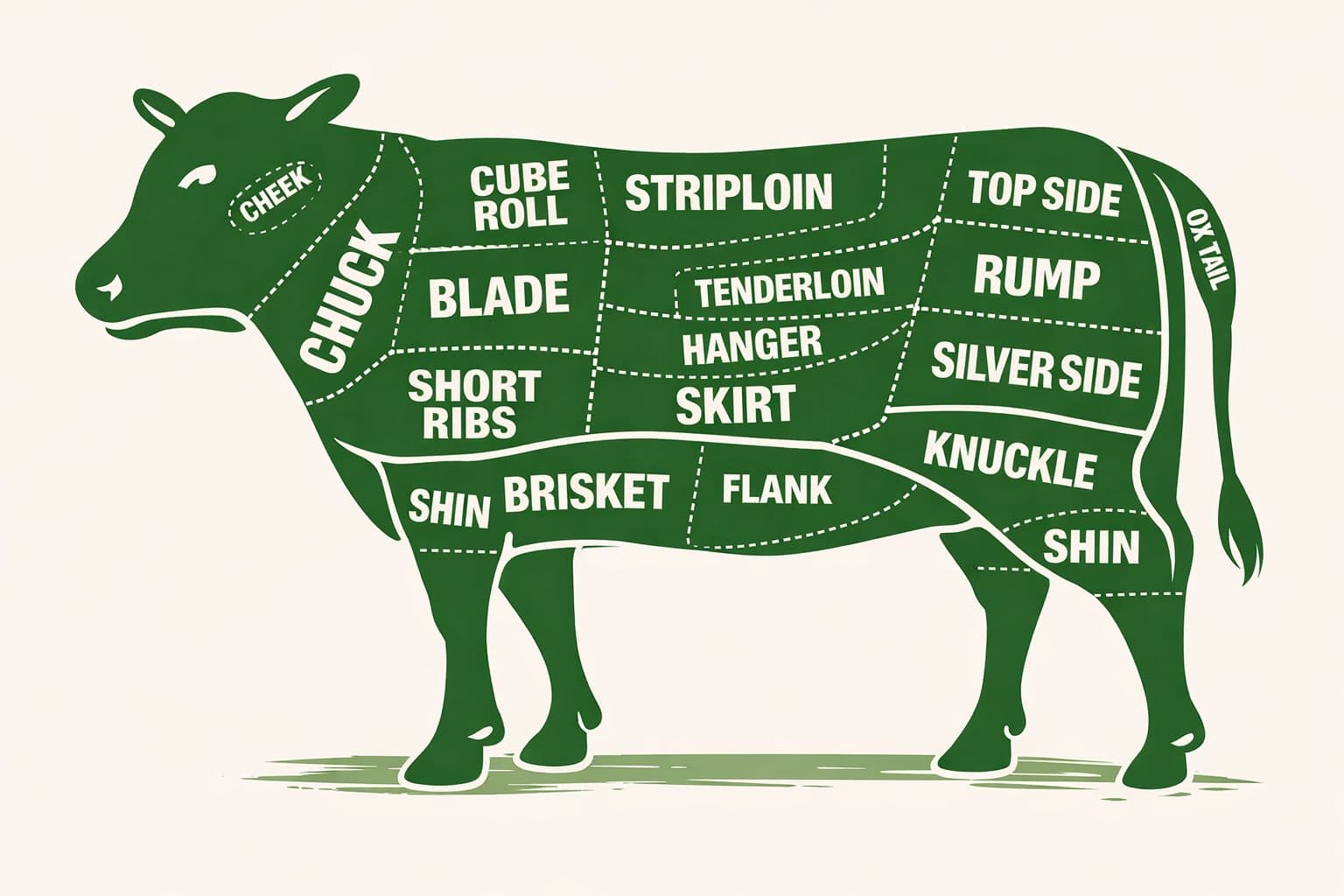
When it comes to choosing beef, the cut matters just as much as how it’s raised. Different cuts of beef come from different parts of the animal, and each one has its own texture, flavour profile and best way to cook it. Some cuts are naturally tender and perfect for quick grilling. Others contain more connective tissue and shine when given time in the oven or slow cooker.
At Our Cow, our farmers see the wh ole animal, not just the steak on the plate. Understanding Australian cuts of beef helps you make better choices in the kitchen, reduce waste, and cook each cut the way it was meant to be cooked.
In this guide, we’ll walk through the different cuts of beef, explain how primal cuts are broken down, and show you which beef meat cuts to cook depending on your method. We’ll also cover common questions around steak cuts and how to choose the right option for your next meal.
Understanding Beef Cuts: From Primal to Plate
All cuts of beef start with what are called primal cuts. These are the large sections first separated during processing. From there, each primal is divided into smaller sub primal cuts, which are then portioned into the steak cuts and roasting cuts you see at the butcher.
The main primal cuts of Australian beef include chuck, rib, loin, rump, round, brisket, plate and flank. Each area of the animal does a different amount of work, and that directly affects tenderness and flavour.
A beef cut chart is useful because it visually shows where these cuts come from. When you understand that a rib eye comes from the rib section or that brisket sits in the lower chest, it starts to make sense why they cook so differently.
Primal Cuts of Australian Beef
- Chuck: From the shoulder area, this hardworking section produces flavour packed cuts like chuck steak, blade and oyster blade steaks. These cuts contain connective tissue, making them ideal for slow cooking and braising.
- Rib: Sits between the chuck and the loin and is home to scotch fillet. This section is known for marbling, which delivers richness and juiciness when grilled or pan fried. In overseas markets, scotch fillet is often called rib eye.
- Loin: Located along the back of the animal, the loin produces some of the most tender steak cuts including striploin and eye fillet. Because these muscles do less work, they are naturally suited to quick, high heat cooking.
- Rump: Found near the back of the animal, rump is leaner with a firm texture. It is a versatile and good value cut that works well for roasting, slicing into steaks or stir fry.
- Round: Cut from the hind leg, round is a lean and hardworking muscle. It includes cuts such as topside and silverside , which are commonly used for roasting. The lower leg produces beef shank, often sliced as osso bucco, which is perfect for slow cooking.
- Brisket: Taken from the lower chest, brisket contains plenty of connective tissue. When cooked low and slow, it breaks down beautifully and delivers rich, hearty flavour.
- Plate and flank: These cuts come from the belly area and include beef flank. They have strong beef flavour and are well suited to braising, stir fry or marinating before grilling.
How Muscle & Fat Influence Meat Tenderness
Cuts that come from muscles used less during the animal’s life tend to be more tender. That is why loin and rib sections produce tender steaks.
Areas that work harder, like chuck and brisket, contain more connective tissue. When cooked slowly, that connective tissue breaks down and creates deep flavour and beautiful texture.
Marbling also plays a big role. Cuts with more intramuscular fat, like rib eye, deliver richer flavour. Lean cuts like eye fillet offer tenderness with a cleaner finish.
Popular Beef Steak Cuts Explained
When most people think about different cuts of beef, they are usually thinking about steak cuts.
In Australia, some of the most popular steak cuts include scotch fillet, sirloin, and eye fillet. Each comes from a different part of the animal and offers its own balance of tenderness, flavour and texture.
Scotch fillet comes from the rib section and is known for its marbling. In some overseas markets it is referred to as rib eye, but here in Australia you will most often see it labelled as scotch fillet or rib fillet. The marbling running thro ugh the meat gives it rich flavour and juiciness when cooked over high heat.
Eye fillet, cut from the loin, is one of the most tender cuts of beef. It is leaner than scotch fillet, with a softer texture and a more delicate flavour.
Sirloin and striploin both come from the loin section. Striploin refers to the whole boneless loin, while sirloin is the steak cut taken from that striploin. Both offer a balance between tenderness and flavour, making them versatile options for grilling or pan frying.
T-bone steaks combines two cuts in one, with striploin on one side of the bone and eye fillet on the other. It offers both tenderness and flavour, making it a popular choice for grilling.
Choosing between these steak cuts usually comes down to preference. If you love marbling and depth of flavour, scotch fillet is hard to beat. If tenderness is your priority, eye fillet is a reliable choice. If you are after something in between, sirloin or striploin are excellent all rounders.
Best Cuts of Beef for Different Cooking Methods
Matching the right beef cut to the right cooking method makes all the difference.
Best Beef Cuts for Roasting
For a classic best roast, look to rump, topside from the round, or a rolled rib roast. These cuts hold their shape and slice beautifully.
Leaner roasting cuts benefit from careful cooking and resting time. A little fat on the outside helps protect the meat and add flavour.
Best Beef Cuts for Slow Cooking
Slow cooking is where tougher beef cuts truly shine.
Chuck, brisket and shin contain connective tissue that softens over time. Given a few hours at a low temperature, these cuts transform into tender, flavour packed meals.
Slower cooking cuts are fan favourites amongst Our Cow customers, as they love making hearty stews, curries and slow cooked roasts at home. These are often some of the most underrated cuts of meat, yet they deliver incredible value and depth.
Best Beef Cuts for Grilling & Pan Frying
High heat cooking calls for tender beef cuts.
Rib eye, scotch fillet, striploin and eye fillet are all excellent choices. They cook quickly, stay juicy when handled properly, and reward simple seasoning.
With these cuts, less is often more. Let the beef speak for itself.
Your Guide to Choosing the Right Aussie Beef Cut
The best cut of beef depends on three things:
- How you want to cook it,
- The flavour you enjoy,
- and your budget.
Therefore:
- If tenderness is your priority, look to eye fillet or striploin.
- If flavour and richness matter most, rib eye or scotch fillet are hard to beat.
- If you love slow cooked meals that fill the house with aroma, chuck and brisket are your friends.
As farmers, we believe in using the whole animal and respecting each cut for what it offers. When you understand different cuts of beef, you waste less, cook with more confidence, and get more from every meal.
When you choose beef from Our Cow, you are choosing cuts that have been raised by Australian farmers and handled with respect from start to finish. That is what good Australian grass fed beef is about. From farm to plate, every cut has a purpose.
FAQs
What are the different cuts of beef meat?
Beef is divided into primal cuts such as chuck, rib, loin, rump and round. These are then broken down into sub primal cuts like rib eye, eye fillet, sirloin and brisket. Each cut varies in tenderness, fat content and ideal cooking method.
What is the best cut of beef?
There is no single best cut of beef. The right choice depends on how you plan to cook it, your flavour preference and your budget. For tenderness, eye fillet is popular. For flavour, scotch fillet is often preferred.
What is the difference between rib eye and eye fillet?
Rib eye comes from the rib section and has more marbling, giving it a richer flavour. Eye fillet is cut from the loin and is leaner and more tender. Rib eye is often chosen for flavour, while eye fillet is chosen for tenderness.
What is the difference between sirloin and scotch fillet?
Sirloin is leaner with a firmer texture and comes from the back of the animal. Scotch fillet, cut from the rib, has more marbling and a softer bite. Scotch fillet tends to be juicier, while sirloin offers a balance of flavour and structure.
Is striploin the same as sirloin?
In Australia, striploin and sirloin refer to the same section of the animal. Striploin is the whole boneless loin section, and sirloin is the steak cut portioned from that striploin. Most sirloin steaks sold in Australia are boneless.